Fixed Mortgage Rates Just Jumped 20 Basis Points. What Five Possible Rate Hikes Mean for Vancouver Buyers and Sellers

Kyle Mark *PREC
· 10 min read
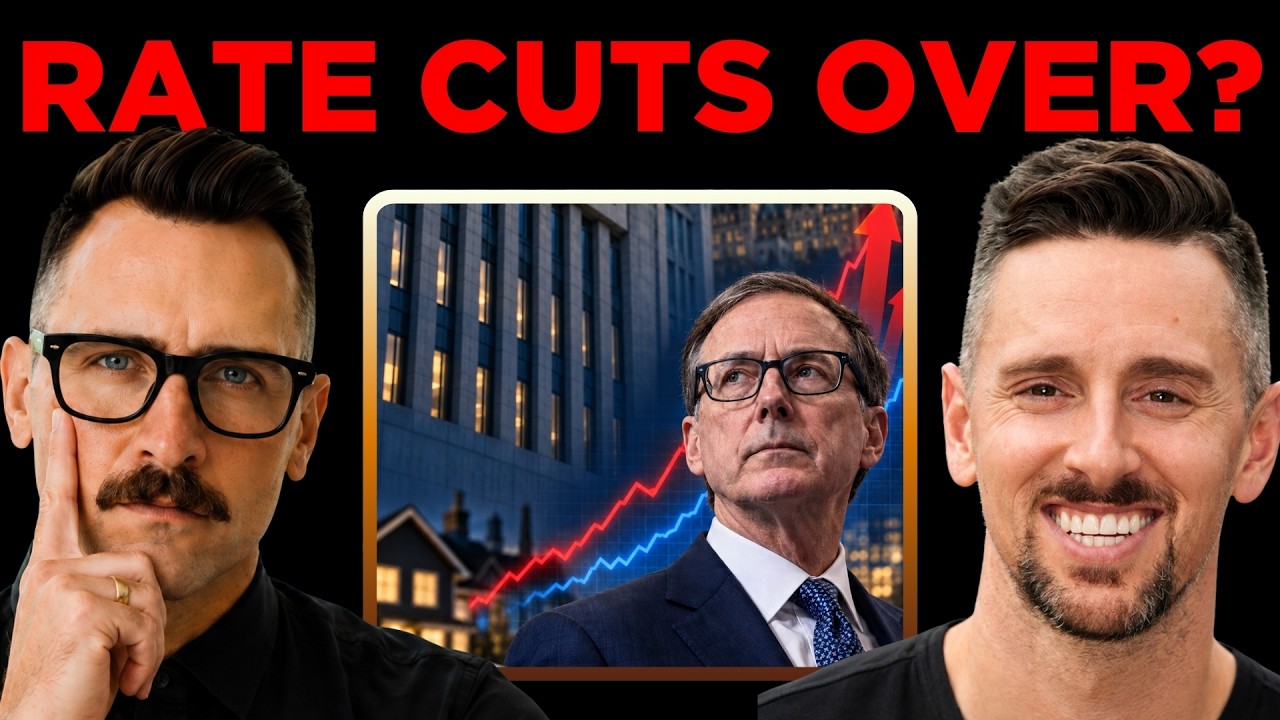
Fixed mortgage rates went up because bond yields jumped, and if the five Bank of Canada hikes markets were pricing in when we filmed in September 2026 actually land, our working rule of thumb says that's $75 a month more for every $100,000 of mortgage. Canadian bond yields moved in a single week, and lenders raised fixed rates by 15 to 20 basis points right behind them. On top of that, markets are now pricing in as many as five increases to the Bank of Canada's policy rate over the next year, driven by what's happening in the global economy. That has real implications for the housing market here in Vancouver and in Toronto.
If you're waiting to buy, rising rates mean higher payments and less money available on the lending side. If you're a seller, it isn't good news either, because higher rates mean fewer people entering the market. On a recent episode of the Coast to Coast Canadian Real Estate podcast, my co-host Mike (who works the Toronto market) and I went through what happened in the bond market, what the lenders are doing, and what we're seeing with our own buyers and sellers. This post pulls that conversation together.
Why did fixed mortgage rates go up in Canada?
The big story that week in September 2026 was a surge in global bond yields that dragged Canada along for the ride. The all-important five-year bond yield went up 20 basis points in one week, to its highest level since the second quarter of 2024.
If you're not following the bond market closely, here's the short version of how it connects to your mortgage:
- Fixed rates follow the bond market. When bond yields go up, fixed mortgage rates go up.
- Variable rates follow the Bank of Canada. The central bank's policy rate is what moves variable rates.
Fixed rates that were sitting around 4.1% the week before are now upwards of 4.3%. We pulled up a tweet from Ron Butler on the episode about fixed mortgage rates roaring on the bond yield surge. He states that every lender is raising fixed rates, the emails were pouring in at 15 basis points and 20 basis points, and all lenders are concerned about future increases. Oil dropped one morning, and bond yields barely moved.
The other piece: markets are now pricing in five hikes over the next year, with the first one possibly as soon as next month. That's two more hikes than markets expected just three weeks earlier.
How much would five rate hikes add to your mortgage payment?
Five quarter-point hikes on the variable side adds up to one and a quarter percentage points. As a working rule of thumb, every quarter-point move costs or saves you about $15 a month for every $100,000 of mortgage.
Run that out over five hikes:
- Per $100,000 of mortgage: about $75 a month more
- On a $600,000 mortgage: about $450 a month more
- On a $1.2 million mortgage: about $900 a month more
In our markets those aren't unusual loan sizes. Mike's average client is taking on a $600,000-plus mortgage at a bare minimum, and even a first-time buyer with $100,000 down on a starter condo might be taking on $400,000. On a detached home in Vancouver you could easily be looking at a $1.2 million or $2 million mortgage.
Mike made the point well on the episode: $450 a month is a car payment for some people. It's a strata fee on a condo. And if rates keep rising, that $450 turns into $525, then $600. Mike went through exactly that ride himself, with a variable rate that started at 1.5% and ended up at six and change over the last five years. You have to be able to stomach that emotionally and handle it financially.
I've been on that same train. We had multiple variable-rate mortgages, it was super uncomfortable, and we had to go into our savings to weather the storm. And that monthly payment number doesn't account for the extra interest you pay over a three- or five-year term.
Does a rate hold protect you until closing?
Buyers don't always realize that being under contract doesn't freeze your numbers. A lot of rate holds don't last as long as your actual purchase timeline.
Say you have a 90-day hold and you're closing in 120 days. Or you have three days left on your rate hold when you get under contract, and you're closing in eight or nine weeks. You'll have to rerun the numbers, and in a landscape where tariffs, conflict in Iran and oil prices bouncing from all-time highs back down are all moving at once, your rate could be higher by the time you close.
I educate my clients on exactly when their pre-approval expires and make sure we're getting the rate locked in step with the purchase. Mike's position on this is blunt, and I agree with it: if a 10 or 20 basis point increase breaks your budget, you probably shouldn't be buying a home at that price. You need enough of a cushion that rate movements don't make or break your decision. Don't buy at your absolute maximum. Run your own payment at a higher rate in our mortgage calculator before you write an offer.
Who Gets Hurt Most: Price-Sensitive Buyers
There's a fine line here. Buyers want the best value possible, and they have every right to wait for it. But a lot of the buyers coming into the market right now are stretching. Maybe they just have enough to get into a detached home, or they're first-time buyers who can finally afford something because prices have come down.
If you have a comfortable budget, a rate increase isn't a huge effect on you. It's annoying, and you'll pay more interest, but it won't change what you can buy. If you're in a price-sensitive bracket where you can just get a condo or just get a townhouse, waiting through an announcement like this can push you out of that category, or out of the market completely.
What I tell my clients is this: if you're comfortable betting on the best-case scenario, which for a lot of people is the market dropping 30% (I don't agree with that call), then you have to be comfortable with the worst-case scenario too. That means the market corrects upward and prices increase, or something happens in the global or Canadian economy and interest rates start to creep up. Both are on the table.
What We're Seeing From Buyers Right Now
I was out with my mortgage broker recently, and he told me he's never seen, in his whole career, the number of people who've been pre-approved with good budgets and then let those pre-approvals lapse without ever getting into the market. I think rising rates are going to push that number higher, and I could be wrong, but I don't see what turns it around this fall.
My buyers are very price sensitive, and they're educated. They understand that if rates go up, that likely means more pain for sellers. Their logic is to wait a little longer, because prices may come down further even with higher rates.
A lot of REALTORS® use rising rates to scare people into the market. That used to work. With how long this market has been soft and how many people are content to wait, I don't think it works anymore. I had an email from a buyer who was ready to go and then decided to take a rental for the next six months instead. They don't want to lock into anything until they feel more comfortable. I asked if there was a specific reason, and there wasn't. It's just the feeling.
At the same time, there are consequences to waiting. Between my channel, Mike's and our socials, we highlight good-value purchases constantly, and people are missing them right now.
What Higher Rates Mean for Sellers
For sellers holding on for their price, this is bad news. If rates go up, expectations have to come down, and the buyer pool shrinks at the same time. Prices are softening and buyers aren't out in full force. You can see what's moving in your area in the free Kyle Mark Report, and our seller page covers how we approach a listing.
Mike and I both expect the back half of September, when we filmed this, through the rest of the year could be slow. Winter is slow anyway, and news that rates could rise gives buyers another reason to say they'll enjoy the winter and come back in spring.
None of this helps the market find the stability we've been looking for. I've been watching for three straight months of stability, and I haven't even seen two months in a row yet.
Could Variable-Rate Holders Become Distressed Sellers?
I'd say the five-hike scenario is far from locked in. It assumes there's no resolution with Iran. A deal could come together in a week, and those hikes could come off the table. That happened a couple of months ago, when three more increases were supposedly locked in for the year and then a peace deal took them off the table. These forecasts can change fast.
But if variable rates go up by a point to a point and a half, a lot of people who just locked into variable mortgages are going to feel it. Yes, borrowers get stress tested at two points above their rate. The stress test doesn't account for how you live your day-to-day life with kids, though, and if your payment jumps by several hundred dollars a month, I think it could create another class of distressed sellers. That will be very interesting to watch. Renewals are the other pressure point, and I went through those in my post on mortgage renewals.
On my own side, I locked my biggest mortgage, on my principal residence, into a three-year fixed at 3.55%, and I'm very happy about that. I do have a couple of variable products, but one of those properties is under contract, so I have some breathing room. Mike gambled on variable again on his five-year renewal. We'll see how that goes.
When Does the Market Find the Bottom?
Both of us have said we're somewhat close to the bottom, maybe sometime next year, with a big caveat: that assumed the world getting back to some kind of normal. Tariffs, instability in the Middle East and other global conflicts throw those predictions out the window and push the timeline back. Consumer confidence runs this market more than pricing does, and when people hear rates are going up, it scares a lot of them out.
Mike's view is that, based on inventory and how many projects are no longer being built, we might see things flatten or find stability around 2029 or 2030, and that assumed rates stayed flat or fluttered. If rates go up, prices need to go further the other way. We're highlighting losses on condos, townhouses and detached homes in both of our markets. Every property type is being hit. Mike also pointed out that in Toronto, prices still haven't come down to the levels we're seeing in Vancouver, where you pull up 2016 or 2017 values. In Toronto the average is still hovering around 2020 levels.
One Bright Spot: The Proposed Business Tax Deduction
There was some positive news. The Carney government announced a major tax reform at the Canada Investment Summit that would let businesses write off investments. Prime Minister Mark Carney said the goal is to make Canada the most attractive place in the G7 to invest.
The program expands the productivity super deduction from last year's budget. The original version only covered a limited set of investments like equipment, machinery and technology, about 15% of possible investments. The expansion makes about two-thirds of assets eligible, including technology, software and vehicles, and the Prime Minister's office said in September 2026 that it drops Canada's marginal effective tax rate on new business investment to 6.4%, the lowest in the G7.
It's a proposal, and it still has to go to the floor for a vote. I think it's a good first step. A big reason the housing market has struggled is that people with money have been moving it outside Canada, and businesses have been moving south. Giving companies a reason to stay and make the investments they've been holding off on would help, especially during a trade war. In theory, lower business taxes could also mean more attractive pricing for consumers.
Cost of Living Is Competing With Housing
Housing doesn't exist in a vacuum. Everything costs more. A burger at White Spot is now $23 to $25. I took my son to Dairy Queen after hockey practice, two small kids' cones and a Peanut Buster Parfait, and it was 20 bucks. Mike now considers a meal under $20 before tax a deal, which would have been an expensive meal five or ten years ago.
Everyone only has so much money to go around. People want it to go to housing, but they have to put food on the table first. When money is tight you're choosing between a house and taking your kids to Disney or a weekend at the cottage. That's part of why interest in the housing market is low, and rising rates turn that choice into a forced decision for some people.
What to Do If You're Buying or Selling Now
If you're buying, know when your pre-approval and rate hold expire, make sure they line up with your closing date, and keep a cushion so a 20 basis point move doesn't sink you. If you're selling, adjust your expectations to a smaller buyer pool and price for the market you're in, not the one from last spring.
If you want to talk through your own numbers, book a call with our team.
And we'd like to hear from you: what did you choose at your last renewal, fixed or variable? Drop it in the comments on the episode.